

Dream Room Advanced Level: Calculation Without a Board
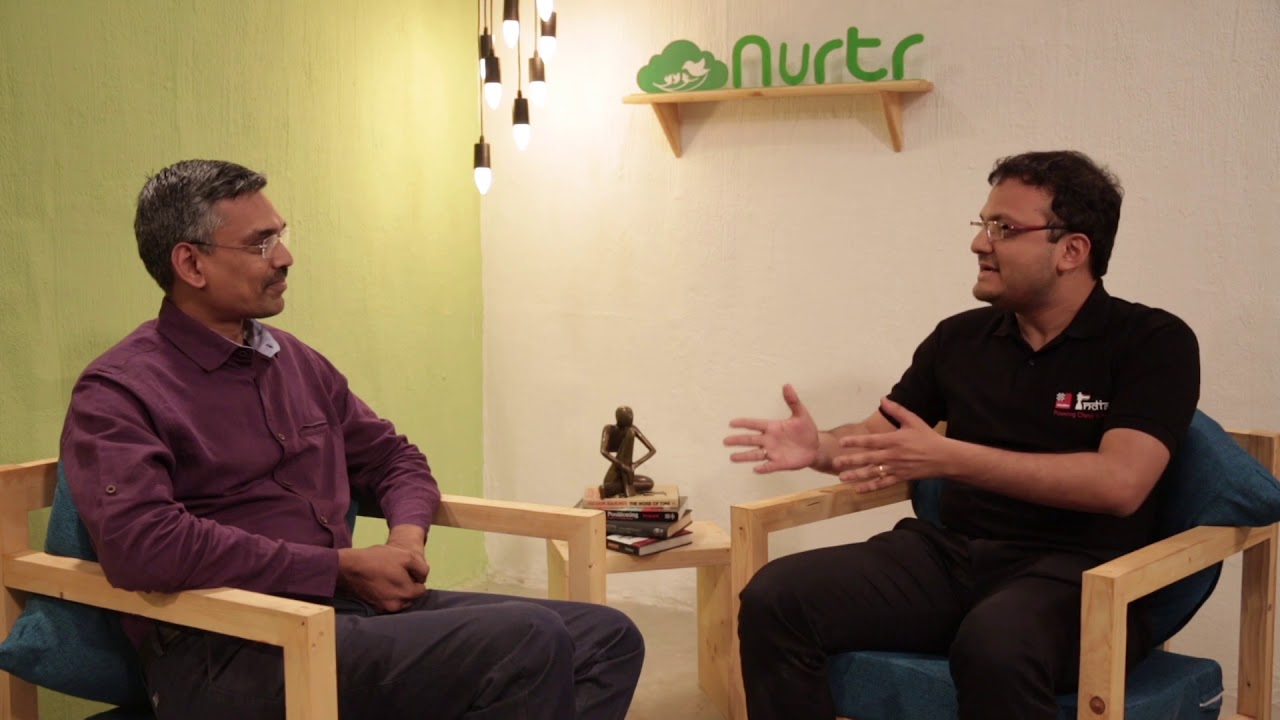
Episode 8 states the thesis of the whole level in one line, quoted below. The method is unusual and very practical. Ramesh dictates a position piece by piece, the player puts on a blindfold, and the variations are discussed out loud — sometimes, as in the first episode, “20–30 moves deep.” Only then does the position appear on the demo board for you. His instruction to the viewer is equally direct: pause, think for ten to twenty minutes, write your lines down, then compare them with the grandmasters’ answers. nurtr bills the Dream Room as “40+ hours of cinematically recorded, comprehensive bestselling content,” and this is the most demanding slice of it.
How it differs from its siblings: the Beginner Level teaches rules and tactical motifs, and the Intermediate Level (90 videos, 25h 37m) builds strategy and endgame basics with junior students. The Dream Room Advanced Level revisits some of the same headings — prophylaxis, improving pieces, the two weaknesses — but with grandmaster guests, deeper calculation and longer, harder endgames. It completes the ladder in our RB Ramesh collection.
| Course Fact | Details |
|---|---|
| Coach | GM RB Ramesh — Praggnanandhaa’s coach, founder of Chess Gurukul, British Champion 2002 |
| On camera | Praggnanandhaa (then IM), GMs Aravindh Chithambaram, Karthikeyan Murali and Abhijeet Gupta, Divya Deshmukh, two experienced Indian coaches |
| Video | 42 episodes · 13h 18m (about 12h 41m unique — two lessons appear twice) |
| Training method | Dictated positions, blindfold solving, pause-and-calculate tasks, game analysis with the player who played it |
| Study files | None — MP4 video only (1.01 GB) |
| Level | Advanced — Level 3 of the nurtr Dream Room |
| Platform | nurtr |
What the Dream Room Advanced Level Trains
Blindfold calculation and endgame studies
Eleven episodes of the Dream Room Advanced Level, just over four hours, are pure calculation. Praggnanandhaa analyses Smyslov vs Rubinetti (1970) blindfolded over two videos. Ramesh’s “three musketeers” — Pragg, Aravindh and Karthikeyan — solve a set of studies blindfolded and later prove they solved them by naming only the final move. Abhijeet Gupta and Divya Deshmukh tackle studies too, Gupta explaining his “method of elimination”, and Aravindh, who Ramesh says has been given “more than 200 or 300 studies”, takes on a single very hard one. Compositions by Afek (under-promotion) and Gurgenidze appear along the way. The coach’s advice on how to practise: solve from the book without setting up the pieces, then set up the board without moving them, and finally have someone read the position to you.
Technique: two weaknesses, prophylaxis and the initiative
The principle of two weaknesses is framed as a lesson in technique: improve your pieces, stop the opponent improving his, fix his weak pawns so they can be neither advanced nor exchanged — and do not expect him to keep making mistakes. In a Karpov example Ramesh warns that “prophylaxis is not passive play.” Manoeuvring is separated from improving pieces: it costs time, belongs in closed positions, and fails if the opponent can open the game. The initiative pair starts from Capablanca’s “initiative means superiority” and a rule of thumb — note one small mistake, punish after the second — then shows Kasparov vs Ligterink (1980).
Isolated pawns, passed pawns and attack
Two IQP lessons list what the isolated pawn gives (control of e5 and c5, open lines and files) and then calculate the d5 break in Kramnik vs Anand, Dortmund 2001, with Praggnanandhaa. Passed-pawn positions are solved blindfold, and one shows the idea a player missed in his own game. For attack, Ramesh shows his 1996 Richter-Rauzer game against Neelotpal Das, with a lesson for young players who fear castling, and Geller vs Velimirović; active defence comes from Abhijeet Gupta’s game at the 2012 Istanbul Olympiad.
Grandmaster-level endgames and Pragg’s own games
The endgames here are long and tricky: knight vs bishop with the wrong-coloured corner, king and pawn endings built around traps for two grandmasters, an opposite-colour bishop ending with two extra pawns against a fortress, and a 37-minute study of Spielmann vs Rubinstein (1909). Ramesh corrects the popular reading of Tarrasch’s “all rook endings are drawn” — it only means the drawing tendency is stronger — and adds that with fewer pawns rook endings become harder, not easier. Carlsen vs Hou Yifan’s king and pawn ending and two of Praggnanandhaa’s own games (against Awonder Liang, and from Gibraltar 2018), analysed with Pragg himself, complete the block.
Coaches on talent, motivation and tournaments
Five short discussions with two senior Indian coaches cover how to assess a new student, hard work versus talent, motivation, tournament routine and the mindset during an event. One coach’s line sums it up: “it takes 1000 factors to play a good game of chess and only one to spoil it.”
Dream Room Advanced Level: Course Index
Episode Index
- Ep 1 — Complex calculations, part 1 — Praggnanandhaa blindfold on Smyslov vs Rubinetti, 1970 (40:03)
- Ep 2 — Complex calculations, part 2 — the same position, continued (18:26)
- Ep 8 — Blindfold studies, part 1 — Praggnanandhaa solves (13:58)
- Ep 9 — Blindfold studies, part 2 — Afek and Gurgenidze compositions (16:27)
- Ep 14 — Chess studies with the champions, part 1 — GM Abhijeet Gupta & Divya Deshmukh (11:28)
- Ep 15 — Chess studies with the champions, part 2 — GM Aravindh Chithambaram (12:02)
- Ep 16 — Complex calculations, part 3 (same game and commentary as Ep 6) (20:45)
- Ep 29 — Complex calculations, part 4 — the “three musketeers” solve blindfold (13:24)
- Ep 30 — Complex calculations, part 5 — Ganguly vs Svidler, 2011 (36:15)
- Ep 39 — Deconstruction of puzzles — answers to Ep 29 (44:21)
- Ep 40 — Complex calculations, part 6 — with GM Abhijeet Gupta (20:19)
Middlegame Strategy · Attack & Defence · 14 videos · 4h 10m
- Ep 3 — Principle of two weaknesses, part 1 — what “technique” really means (26:00)
- Ep 6 — Attacking the king, part 1 — Ramesh vs Neelotpal Das, 1996 (Sicilian, Richter-Rauzer) (20:50)
- Ep 7 — Improving the pieces — a closed-position plan (10:29)
- Ep 11 — Playing with the isolated queen pawn — the theory (7:41)
- Ep 12 — Playing with the isolated pawn — Kramnik vs Anand, Dortmund 2001 (22:17)
- Ep 13 — The passed pawn, part 1 — solved blindfold (19:36)
- Ep 18 — Passed pawn, part 2 — the idea White missed (14:40)
- Ep 19 — Prophylaxis — a Karpov game (18:50)
- Ep 22 — Manoeuvring of pieces (15:31)
- Ep 23 — Active defence — Abhijeet Gupta, Istanbul Olympiad 2012 (27:43)
- Ep 25 — The initiative, part 1 — explanation (15:26)
- Ep 26 — The initiative, part 1 — Kasparov vs Ligterink, 1980 (19:47)
- Ep 35 — Prophylaxis & improving pieces — Leko vs Short (14:42)
- Ep 36 — Attacking the king, part 2 — Geller vs Velimirović (17:07)
Endgames · Game Analysis · 12 videos · 4h 05m
- Ep 4 — Knight vs bishop endgame, part 1 — Black to move and draw (20:07)
- Ep 20 — King & pawn ending, part 1 — the outside passed pawn (15:46)
- Ep 21 — King & pawn ending, part 2 — traps for two GMs (23:00)
- Ep 27 — Knight vs bishop endgame, part 2 — the wrong-coloured corner (13:59)
- Ep 28 — Opposite-colour bishop ending — two extra pawns vs a fortress (16:39)
- Ep 31 — Analyzing Praggnanandhaa, part 1 — vs Awonder Liang (Najdorf) (24:03)
- Ep 32 — Analyzing Praggnanandhaa, part 2 — Gibraltar 2018 (31:02)
- Ep 33 — GM’s game analysis, part 1 — Carlsen vs Hou Yifan king and pawn ending (16:30)
- Ep 37 — Rook & pawn ending, part 1 — fewer pawns, harder endgames (19:49)
- Ep 38 — Rook & pawn ending, part 2 — why the f-pawn decides (11:04)
- Ep 41 — Rook & pawn ending, part 3 — Spielmann vs Rubinstein, 1909 (37:19)
- Ep 42 — King & pawn ending (same game and commentary as Ep 33) (16:40)
Coaches’ Discussions · 5 videos · 54m
- Ep 5 — Discussion with celebrated coaches, part 1 — assessing a new student (13:55)
- Ep 10 — Discussion with celebrated coaches, part 2 — hard work or talent? (9:43)
- Ep 17 — Discussion with celebrated coaches, part 3 — motivation (9:44)
- Ep 24 — Discussion with celebrated coaches, part 4 — playing tournaments (12:35)
- Ep 34 — Discussion with celebrated coaches — during the tournament (8:42)
Package
- 42 MP4 videos · 13h 18m in total (about 12h 41m of unique lessons — episodes 16 and 42 repeat 6 and 33)
- No PGN or PDF files — every position is read out and then shown on the demo board
- Total package: 1.01 GB
Who Should Take the Dream Room Advanced Level
- Strong juniors and tournament players whose calculation breaks down after three or four moves.
- Graduates of the Intermediate Level who want the same coach and the same themes at a higher difficulty.
- Players who struggle to convert a better endgame — the two-weaknesses, rook and king-and-pawn lessons target exactly that.
- Coaches looking for a proven training format: dictated positions, blindfold solving, and answers checked by the final move.
If pawn breaks, the bad bishop and basic rook endings still feel new, start with the Dream Room Intermediate Level first. Players who want more calculation work after this level can continue with Ramesh’s Improve Your Chess Calculation.
- A rare look at how Praggnanandhaa and his training partners calculate, blindfold and out loud
- Over four hours of studies and complex calculation built for pause-and-solve practice
- Deep endgames, including a 37-minute Spielmann vs Rubinstein rook ending
- Pragg’s own games analysed together with Pragg
- Clear progression from the Beginner and Intermediate levels
- Two lessons are duplicated: episode 16 repeats episode 6, and episode 42 repeats episode 33 (about 37 minutes)
- No PGN or PDF files — you rebuild dictated positions yourself
- Demanding: the calculation episodes only pay off if you really pause and solve
- Half the length of the Intermediate Level
FAQ
Can I follow the blindfold sessions if I can’t visualise that well?
Yes. The players solve blindfolded, but after the position is dictated it is shown to you on the demo board. You can solve with the board in front of you and try the blindfold method later.
Do I need the Intermediate Level before the Dream Room Advanced Level?
Not strictly, but the Advanced Level assumes you already know prophylaxis, improving pieces, pawn majorities and basic rook endings, which the Intermediate Level teaches. It does not re-explain them from scratch.
Which Praggnanandhaa games are analysed?
Two of his own games — a Najdorf against Awonder Liang and a game from the Gibraltar Open 2018 — discussed move by move with Pragg, plus his blindfold analysis of Smyslov vs Rubinetti and Kramnik vs Anand.
What files do I get, and how is it delivered?
42 MP4 videos (1.01 GB); no PGN or PDF files. Digital files. Crypto payment only. Fast delivery is handled manually after payment confirmation. Download links remain available for 7 days; save your files locally.
The Dream Room Advanced Level is less a lecture series than a training room you are invited into. Watching Praggnanandhaa and young grandmasters calculate blindfold, then trying the same positions yourself, is a demanding and very effective way to build visualisation. Add GM-level endgames and coach discussions, and the level justifies its place at the top of the ladder.
The duplicated lessons and missing PGNs are worth knowing about, but they do not change the core value. Get all 42 videos through Courses On Budget and check the coupons page first.
Browse the category: Chess Courses · Chess Courses Cheap List
More from the coach: GM RB Ramesh courses
New releases: Courses On Budget updates
Official course page: nurtr.com Dream Room
Background: Endgame study on Wikipedia
Recommended Ramesh stack:


Reviews
There are no reviews yet.