

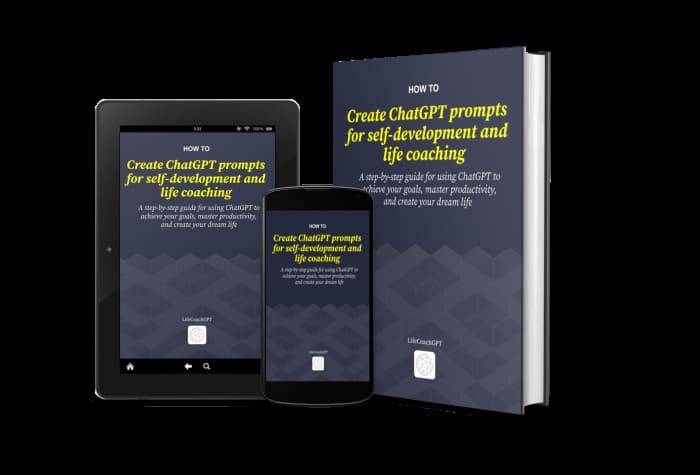
This How to create ChatGPT prompts for self-development and life coaching – LifeCoachGPT Index Review 2026 is based on the attached 30-page LifeCoachGPT guide and its course index. The guide focuses on goal setting, productivity, self-reflection, and prompt-writing patterns while repeatedly framing ChatGPT as a tool to use alongside a human life coach. Browse the product through Courses On Budget.
ChatGPT Prompts for Self-Development and Life Coaching is a compact guide rather than a video-heavy course. Its value is in a simple progression: understand the ChatGPT interface and prompt basics, use prompts to define and break down goals, then turn those goals into tasks, priorities, time blocks and self-reflection prompts. The closing section extends the same workflow to values, beliefs and “dream life” planning.
How to create ChatGPT prompts for self-development and life coaching – LifeCoachGPT Index Review 2026: What It Teaches
The guide starts at beginner level. It explains how a user interacts with ChatGPT through natural-language prompts, then gives five practical prompt-writing recommendations: be specific, ask open-ended questions, use positive language, stay consistent in phrasing, and use “training” prompts plus separate conversation threads. The course text recommends keeping different life areas—such as work, finances, relationships and productivity—in separate conversations so each thread stays focused on a single topic.
LifeCoachGPT Curriculum Map
| Guide section | Main objective | Examples used in the PDF |
|---|---|---|
| Introduction | Position ChatGPT as a support tool | Goal setting, time management, motivation, use with a human coach |
| Step 1 | Account/interface basics and prompt quality | Specific prompts, open questions, positive language, consistency, training prompts |
| Step 2 | Turn goals into measurable action | Career goals, relationships, finances, side-hustle brainstorming |
| Step 3 | Improve productivity | Task lists, prioritization, time blocking, procrastination reflection |
| Conclusion | Align action with values and beliefs | Debt/savings plans, routines, limiting beliefs, skills, hobbies, progress review |
LifeCoachGPT — How to Create ChatGPT Prompts for Self-Development and Life Coaching
The 30-page PDF is a step-by-step prompt guide for using ChatGPT as a self-development support tool. It covers prompt construction, goal planning, productivity and reflective planning, while explicitly recommending continued human coaching and professional care where appropriate.
- Five prompt-writing tips for clearer and more useful responses
- Separate conversation threads for different life areas
- Goal decomposition into specific, measurable and actionable steps
- Task lists, prioritization and time-blocking prompts
- Progress reflection, values, beliefs and long-term planning
The Prompt Framework: Simple, Focused, Iterative
Start by setting the role and tone
The guide demonstrates a “training” prompt that asks ChatGPT to act like an empathetic and encouraging life coach experienced in helping people achieve goals. The point is not a hidden system feature; it is a conversation-level instruction that establishes the role, tone and expected behavior for the thread. The PDF then recommends customizing that setup when opening a thread for a different topic.
Use focused conversation threads
A practical organizational idea in the guide is to separate conversations by life area. Work, finances, relationships and productivity are given as examples. The guide explains two reasons: keeping context focused can make responses more relevant, and topic separation makes earlier guidance easier to find later.
Move from goals to plans
The goal-setting section emphasizes clear and measurable goals, breaking large goals into smaller steps, building a plan of action, and anticipating obstacles. Sample prompts cover promotion goals, identifying strengths and weaknesses, communication and trust in relationships, budgeting/saving/investing, and brainstorming additional-income ideas around an existing interest.
For broader prompt-focused material, Courses On Budget also lists How to Prompt ChatGPT, Prompt Engineering with ChatGPT 4 & Midjourney — 1000 Prompts, and Quick Wins with ChatGPT. These internal links cover adjacent learning topics rather than identical self-development content.
Productivity: Tasks, Time Blocks and Reflection
The productivity section keeps the same logic but moves from “what do I want?” to “what will I do next?” It recommends using ChatGPT to turn goals into task lists, prioritize important work, develop time-management strategies and set realistic timelines. A sample time-blocking prompt asks ChatGPT to organize a task list into a weekly schedule using high, medium and low priorities.
The guide also addresses productivity obstacles. One example prompt asks for help with last-minute procrastination that leads to failure. The PDF describes ChatGPT as a tool for self-reflection and self-awareness: users can ask questions about their habits, identify areas for improvement and keep refining a personalized productivity plan. The final section carries this forward into values and beliefs, routines, limiting beliefs, learning new skills and regular progress review.
Important Boundaries in the LifeCoachGPT Guide
The PDF includes a prominent disclaimer. It says the information is for general informational purposes and is not a substitute for professional medical advice, diagnosis or treatment. It tells readers with medical questions or concerns to consult qualified healthcare professionals, states that the guide is intended for healthy adults aged 18 or older, and explicitly says LifeCoachGPT/ChatGPT do not guarantee specific results.
The guide also says ChatGPT cannot replicate the human connection of a real life coach and recommends meeting regularly with a human coach for encouragement, feedback and accountability. That limitation is important to preserve: the course is a prompt and planning guide, not medical care, therapy, diagnosis, or a replacement for a qualified professional.
Who Is This Guide For?
- ChatGPT beginners who want prompt-writing basics before moving into more complex workflows.
- Goal-oriented learners who want to translate broad ambitions into measurable steps, tasks and timelines.
- Productivity-focused users who want examples around prioritization, time blocking and procrastination.
- Self-development users who want structured reflection around values, habits and progress while keeping a human coach in the loop.
- Compact 30-page format with a clear setup → goals → productivity progression
- Uses concrete prompt examples rather than only explaining concepts abstractly
- Encourages separate topic threads and iterative refinement of responses
- Includes explicit professional-care and human-coach boundaries
- The guide starts with basic account/interface material, so experienced ChatGPT users may find the opening section elementary
- It is a PDF guide rather than a large video course or exercise library
- The examples are general templates that still require users to add their own situation, goals and constraints
5-Question LifeCoachGPT Course Quiz
1. What is the first prompt-writing tip listed in the guide?
Answer: Be specific.
Why: The guide says clearly defining the goal or problem gives ChatGPT a better basis for responding.
2. Why does the guide recommend separate conversation threads?
Answer: To keep each topic focused and make guidance easier to organize and revisit.
Why: It specifically gives work, finances, relationships and productivity as examples of separate areas.
3. What should happen after a large goal is defined?
Answer: Break it into smaller, manageable and measurable tasks or steps.
Why: The guide repeatedly turns broad goals into actionable roadmaps and timelines.
4. What productivity method appears in a sample prompt?
Answer: Time blocking with task prioritization.
Why: The example asks ChatGPT to create a weekly schedule using high, medium and low priorities.
5. What major limitation does the guide state about ChatGPT as a life coach?
Answer: It cannot replace the human connection or professional medical care.
Why: The PDF recommends using ChatGPT alongside a human coach and includes a medical disclaimer.
If you want to move from recognition to practical application, work through the original course material in sequence and repeat the exercises that match your use case.
LifeCoachGPT FAQ
How long is the LifeCoachGPT guide?
The attached core PDF is 30 pages.
What does the guide teach?
It covers ChatGPT account/interface basics, prompt-writing tips, goal setting, productivity, reflection on values and beliefs, and examples of prompts for practical self-development use cases.
Does it include sample prompts?
Yes. Examples include role-setting “training” prompts, career goals, relationship communication, financial goals, side-hustle brainstorming, time blocking and procrastination.
Does the guide recommend replacing a human coach with ChatGPT?
No. It explicitly says ChatGPT cannot provide the same human connection and recommends using it alongside a real human life coach.
Is it medical or therapeutic guidance?
No. The disclaimer says it is general informational material and not a substitute for professional medical advice, diagnosis or treatment.
Where can I browse more AI and ChatGPT courses?
Use the AI & ChatGPT category, the AI Courses Cheap list, and the updates page.
Final Verdict
The attached guide is best understood as a concise beginner-friendly prompt workbook for personal goals and productivity. Its strongest practical ideas are specificity, open-ended questioning, focused topic threads, measurable goals, task decomposition and iterative reflection. The guide itself sets clear boundaries around human coaching and medical care. If that compact format matches what you want, the product page is the next step; coupon 5050 can be checked at checkout.
Browse more programs through Courses On Budget and check the latest course updates.