

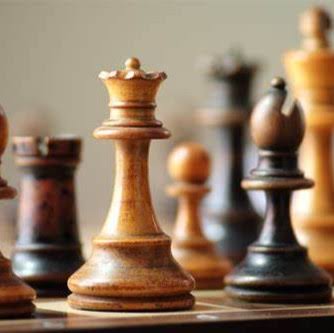
Mastering Positional Play: Five Factors, One Game per Class
Tukhaev opens the first class by calling the series “the long project, the 52-week course on positional chess.” Positional decisions, in his words, are the ones that are “a little bit more subtle” and bring no immediate gain, but whose fruits “will be obvious later.” To make those choices less of a guess he ranks five factors: king’s safety first, then material, piece activity, pawn structure and space. Every class takes one model game, stops at the critical moments and asks the live audience what they would play, then explains the answer through those factors. The Q&A at the end of each session adds practical tips on openings, books and training.
nurtr’s coach profile says Tukhaev “loves teaching positional play and is considered one of the stronger proponents of the skill.” The same page lists him as a Ukrainian grandmaster (title 2007, peak rating 2575) who beat Magnus Carlsen in round 1 of the 2018 FIDE World Rapid Championship. This package covers the first three chapters of Mastering Positional Play — king’s safety, material and activity; the structure and space chapters are announced in class but not part of these files. For more strategy titles, browse our chess courses list.
| Course Fact | Details |
|---|---|
| Instructor | GM Adam Tukhaev (Ukraine; GM 2007; peak rating 2575) |
| Topic | Positional play and middlegame strategy through five factors |
| Format | Recorded live webinars with audience questions and end-of-class Q&A |
| Video | 19 recordings · 20h 9m (Classes 1–20; Class 14 is not included) |
| Chapters | King’s safety (6 classes) · Material imbalances (7) · Piece activity (5) |
| Study files | None — MP4 only (734 MB); PGNs were shared as chat links during the live classes |
| Level | Intermediate to advanced club players |
| Platform | nurtr |
What Mastering Positional Play Teaches
Chapter 1: king’s safety comes first
Class 1 uses a Carlsen vs Nepomniachtchi online rapid game from the London System to show all five factors at work, including how a quiet move like e3 can leave a bishop on d2 passive. Then the king’s-safety chapter begins: Karpov vs Kasparov from their 1985 match (“Handle with Care”), Harikrishna vs Van Wely on generating an attack, Kasparov vs Portisch and the bishop sacrifice on g7 that tears the king’s shelter apart, and Tukhaev’s own decisive-round win over Ukrainian GM Vitaliy Bernadskiy from 2017 — a game he says helped him win that tournament. Carlsen vs Karjakin closes the chapter.
Chapter 2: reading material imbalances
The material chapter is the heart of this Mastering Positional Play package — seven classes, about seven and a half hours. Carlsen vs Ding Liren shows how to use the two bishops. Kasparov’s famous exchange sacrifice against Shirov in the Sveshnikov is followed by Tukhaev’s own game, where he recognised the same structure and offered the exchange for a powerful bishop; together they list the reasons to give up a rook for a minor piece — ruin the king’s shelter, double the pawns, create a passed pawn. Ivanchuk vs Leko shows when two rooks beat a queen (clear targets, open files), Tukhaev’s game against Indian GM Lakshman in Hyderabad shows the reverse, Carlsen vs Nakamura gives the rule for rook vs minor pieces — “simplify and restrict” — and Miles vs Timman covers bishop vs knight with heavy pieces on the board.
Chapter 3: piece activity
The activity chapter starts with weak squares in a Karpov vs Kasparov Sicilian, where Kasparov’s early pawn sacrifice buys active pieces. Stockfish vs Leela Chess Zero becomes a lesson on the good knight against the bad bishop and on converting a static edge: “the first priority is to deny any counterplay, not to allow any kind of tactical tricks.” Flohr vs Geller in the King’s Indian Exchange shows Black trading off a passive bishop and eyeing the weak d4-square; an engine game from 2015 illustrates a deadly rook lift; and in Class 20 Tukhaev shows, from his opponent’s side, a game he lost to Georgian GM Mikheil Mchedlishvili — a lesson in why a pawn sacrifice for activity is often worth it.
Learning inside a live class
Because these are live recordings, you hear the questions club players actually ask, and the mistakes they actually suggest in the chat, before the grandmaster explains why a natural move fails. Tukhaev also reminds the class that “chess is very much a tactical game and you should always calculate” — the factors guide the search, they do not replace it. The flip side is time: each session spends a few minutes on welcome messages, technical checks and reading the chat.
Mastering Positional Play: Class Index
Chapter 1 · King’s Safety · 6 videos · 6h 33m
Class Index
- Class 1 — Positional factors — what this is all about (Carlsen vs Nepomniachtchi, London System) (1:05:28)
- Class 2 — Handle with care — Karpov vs Kasparov, 1985 match, Queen’s Gambit Declined (1:03:29)
- Class 3 — Eyes on the prize: generating an attack — Harikrishna vs Van Wely (1:03:38)
- Class 4 — Destroying the king’s shelter, part 1 — Kasparov vs Portisch (1:08:08)
- Class 5 — Destroying the king’s shelter, part 2 — Tukhaev vs Bernadskiy, 2017 (1:06:37)
- Class 6 — Why are you running? — Carlsen vs Karjakin (1:06:08)
Chapter 2 · Material Imbalances · 7 videos · 7h 32m
- Class 7 — Two bishops advantage: brothers in arms — Carlsen vs Ding Liren (1:03:43)
- Class 8 — Exchange sac: your rooks have no power here, part 1 — Kasparov vs Shirov (Sveshnikov) (1:04:02)
- Class 9 — Exchange sac, part 2 — Tukhaev’s own exchange sacrifice (1:03:21)
- Class 10 — Power play: two rooks vs queen — Ivanchuk vs Leko (1:08:31)
- Class 11 — Bringing two rooks down with a queen — Tukhaev vs Lakshman, Hyderabad (1:05:40)
- Class 12 — Rook vs minor pieces: simplify and restrict — Carlsen vs Nakamura (1:05:42)
- Class 13 — Long-range pieces need some air — Miles vs Timman (bishop vs knight) (1:01:39)
Chapter 3 · Piece Activity · 5 videos · 5h 09m
- Class 15 — Weak squares — Karpov vs Kasparov, Sicilian (1:02:32)
- Class 16 — My kingdom for a horse — Stockfish vs Leela Chess Zero (good vs bad bishop) (1:02:07)
- Class 18 — Clumsy rook — Flohr vs Geller, King’s Indian Exchange (1:00:44)
- Class 19 — A deadly case of a rook lift — an engine game from 2015 (1:00:50)
- Class 20 — Don’t be shy, sac a pawn! Part 1 — Tukhaev vs Mchedlishvili, Caro-Kann (1:03:43)
Extra File · 1 videos · 53m
- Class 17 — File labelled “The Good and the Ugly” — actually a lecture by another coach on Bent Larsen (Geller vs Larsen, 1967) (53:31)
Package
- 19 MP4 recordings of live online classes · 20h 9m in total
- No PGN files in the package — the coach shared PGN links in the live chat, which are not part of these files
- Product cover image (JPG) · total package: 734.15 MB
Is This Positional Course Right for You?
- Club players who calculate well but drift in quiet positions and don’t know which plan to choose.
- Players who learn best from complete model games — each class is one game, explained from opening to decisive moment.
- Anyone unsure how to judge material imbalances: two bishops, exchange down, two rooks vs queen, rook vs minor pieces.
- Students who like a classroom feel, with questions to answer before the explanation.
Complete newcomers to strategy will get more from a gentler start such as First Steps in Positional Play. If you prefer short, edited episodes over live sessions, the nurtr Dream Room Intermediate Level by GM RB Ramesh covers prophylaxis, pawn structure and exchanges in 10–30 minute lessons.
- A clear, ranked framework you can apply in your own games
- About an hour per class, one complete game each
- Mix of world-championship classics, modern elite games, engine games and the coach’s own games — including a loss
- The material-imbalance chapter is unusually thorough
- Live questions show the typical club-player mistakes before they are corrected
- Only the first three of five chapters; pawn structure and space are not included
- Class 14 is missing, and the file labelled Class 17 is a different coach’s lecture on Bent Larsen
- No PGN files in the package
- Live-session overhead: greetings, technical checks and chat reading in every class
FAQ
What are the five positional factors?
In Tukhaev’s order of importance: king’s safety, material, piece activity, pawn structure and space. He stresses that in real games they are intertwined and hard to separate completely.
Is this the full 52-week Mastering Positional Play course?
No. It contains 19 recordings from Classes 1 to 20 (Class 14 is absent). Eighteen are Tukhaev’s own classes, about 19h 16m; the Class 17 file holds an unrelated lecture on Bent Larsen’s games by another coach.
Do I need to know specific openings?
No. Openings are covered only briefly to reach the middlegame — London System, Queen’s Gambit Declined, Sicilian, Sveshnikov, Caro-Kann, King’s Indian — and the lessons focus on plans after the opening.
What files do I get, and how is it delivered?
19 MP4 videos plus a cover image (734 MB); no PGN files. Digital files. Crypto payment only. Fast delivery is handled manually after payment confirmation. Download links remain available for 7 days; save your files locally.
Mastering Positional Play gives club players something many strategy courses lack: a simple order of priorities to test every candidate move against. Tukhaev applies it patiently across eighteen classes of strong games, and the material-imbalance classes alone justify the purchase for anyone who loses the thread when the material is unbalanced.
Know what you get — three chapters, live-class pacing, no PGNs — and it is an excellent twenty hours of strategy. Get the full set through Courses On Budget after checking the coupons page.
Browse the category: Chess Courses · Chess Courses Cheap List
New releases: Courses On Budget updates
Official coach page: GM Adam Tukhayev on nurtr.com
Background: Chess strategy on Wikipedia
Recommended positional play stack:


Reviews
There are no reviews yet.