

Dream Room Beginner Review: The Verdict in 60 Seconds
Short version: this is one of the best-ordered beginner seasons we have reviewed, and also one of the lightest on study material. GM Ramesh teaches a small class of young players, and the season moves in a deliberate line from the rules to calculation, to tactical themes, to sacrifices against the king, and only then to opening rules and the first endgames. Every episode is short enough for a child’s attention span. What you do not get is homework: the package is video only, so the exercises the coach mentions have to come from somewhere else.
In this Dream Room Beginner review, structure earns the top mark because nothing appears before you need it: the pin is taught before the sacrifices that rely on it, and the forcing-move routine from Episode 17 is reused in almost every later solution. Depth drops to 7 because openings and endgames are introductions by design — two episodes of principles, one of endings. Practice value stays high thanks to the live solving, but study files score 6 because there is not a single PGN or PDF in the folder. If you are still comparing beginner options, the chess courses list collects them all.
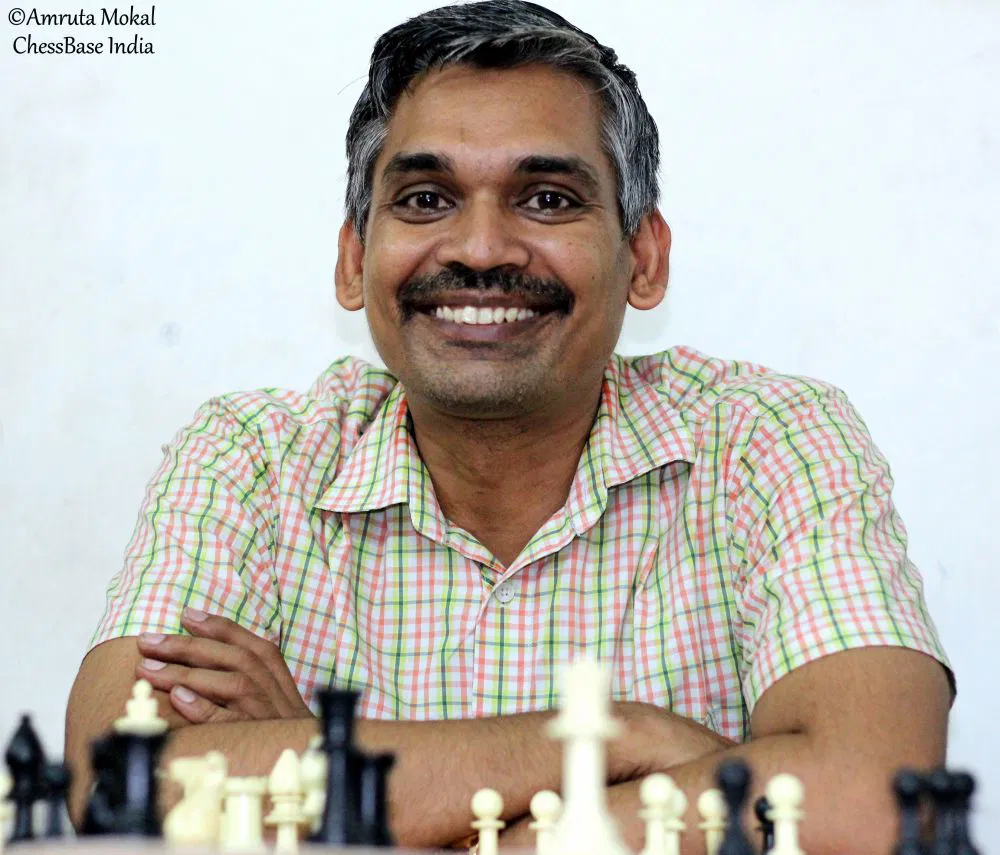
Meet the Coach
- British Champion 2002 and Commonwealth champion 2007 (per nurtr)
- Coach of India’s Olympiad team in 2012, 2014, 2016 and 2018
- FIDE Mark Dvoretsky Award 2018 for best trainer of juniors
- Has trained more than 10 Grandmasters, according to his nurtr profile
An award for training juniors fits a season built around juniors, but the most revealing moment is a confession in Episode 24. Decoy and deflection is one of his favourite topics, yet he says he did not know the theme even had a name until after he had won his first national age-group title — he had simply been playing it. That story explains the method of the whole course: the patterns come first, the labels second, and the class is asked to find the move before anyone names the theme.
How to Get the Course
Where the 5h 17m Actually Goes
For this Dream Room Beginner review we sorted all 39 runtimes by content type instead of by episode number. The result is more balanced than the titles suggest: tactics and attacking the king together take more than a third of the season, while the five conversations with parents and the mental trainer add up to close to 50 minutes.
The logic of the season is a chain in which each link needs the one before it. In the coach’s own running order it looks like this:
A Worked Example: The Fried Liver, Punished Move by Move
For this Dream Room Beginner review we followed one game from start to finish. The second half of Episode 34 replays a classic king hunt from the Two Knights Defence, and the class is asked to find most of White’s moves. We checked every move below on a board.
- The rule being broken. After 1.e4 e5 2.Nf3 Nc6 3.Bc4 Nf6 4.Ng5 d5 5.exd5, Black grabs back the pawn with 5…Nxd5. The coach points out that modern theory prefers 5…Na5, and that this game is one reason why: “People don’t take Knight D5 anymore.”
- The concrete punishment. 6.Nxf7! forks queen and rook, and after 6…Kxf7 7.Qf3+ Ke6 the black king is standing in the centre. 8.Nc3 adds a third attacker to d5. The coach’s comment is pure opening principle: the queen did nothing on d1 and the knight did nothing on b1; on f3 and c3 they work.
- The defence, and the better defence. Black chose 8…Nce7. Ramesh notes that 8…Ncb4 was probably the best move, though White is already doing well.
- The surprising quiet move. Instead of chasing, White castles: 9.O-O c6 10.Re1 Bd7 11.d4 Kd6. Castling keeps White’s king safe and brings the h1-rook to the e-file — a rare case where a quiet move in the middle of an attack is the strongest choice.
- The finish. 12.Rxe5! Ng6 13.Nxd5 Nxe5 14.dxe5+ Kc5 15.b4+, and mate follows next move: 15…Kxc4 16.Qd3# or 15…Kd4 16.Qf4#. White has given up a rook, and the material count no longer matters.
Both of the episode’s warnings appear in this one sequence. Black left the king in the centre and spent time on material, and White answered with development, castling and one forcing move after another.
Second Example: The Three-Piece Attack Rule
Episode 33 adds a counting rule that beginner courses rarely teach. Before sacrificing against a king, count the pieces defending it and add three: that is how many attackers you need. One defender means four attackers. The coach explains why young players need this — they tend to start an attack before their pieces are out, and “usually it will not work.”
The model position shows the rule working. White’s bishop takes on h6. If the pawn recaptures, the queen recaptures and nothing stops mate on h7. If Black declines and grabs material on e5 instead, White does not retreat: the bishop is now in the queen’s way, so it is thrown in on g7 as well, a clearance idea from Episode 25. After the king takes, White has two checks and must choose the one that keeps the king in the box — Qh7+ lets it run to f6, while Qg5+ forces it to h8; the queen then returns to h6, the king goes back to g8, and Qh7 is mate. It is a small but very useful lesson in choosing between checks, and it shows CCTP and the tactical themes working together.
The Index, Turned Into a 4-Week Study Plan
The course page lists all 39 files. For this Dream Room Beginner review we rearranged them into twelve chess sessions of 14 to 31 minutes, three a week, with the five talks set aside for evenings when a parent can watch too. Every minute of the 5h 17m is included, and each session ends with a board task taken from that session’s episodes.
| Week | Watch | Video time | Then do |
|---|---|---|---|
| 1 | Eps 1–3 | 24:48 | Promote and capture en passant with one hand only |
| 1 | Eps 4, 5, 7 | 14:23 | Write a short game of your own on a scoresheet |
| 1 | Eps 8–11 | 24:59 | Set five threats and find every answer to each |
| 2 | Eps 12–14, 16 | 22:50 | Mate with king and rook against a clock |
| 2 | Eps 17–18 | 18:13 | Label each move of five solved puzzles C, C, T or P |
| 2 | Eps 19, 20, 22 | 21:51 | Sort ten pins into absolute and relative |
| 3 | Eps 23–25 | 23:54 | Rebuild the Bxf7+ and Ng5+ decoy from Episode 24 |
| 3 | Eps 26–28 | 23:57 | Prepare a fork that is not on the board yet |
| 3 | Eps 30–32 | 24:56 | Check the king cover in your last three games |
| 4 | Eps 33–35 | 31:04 | Replay the Fried Liver to move 16; count attackers |
| 4 | Eps 37–38 | 23:05 | Test your own first ten moves against the “do not” list |
| 4 | Ep 39 | 15:10 | Win the Lucena position by building the bridge |
| Evenings | Eps 6, 15 · Eps 21, 29, 36 | 23:20 · 24:55 | Watch with a parent; agree one small goal for the month |
First Season · Beginner
GM RB Ramesh — Dream Room Beginners Episodes 1-39
Thirty-four board lessons and five talks, recorded as a coached class: from moving the pieces to sacrifices on h7 and h6, the opening rules, the Lucena and the Philidor. The verified file list, with sizes, is on the product page.
Test Yourself: Is This Season Below or At Your Level?
A useful Dream Room Beginner review should help you decide whether you need the course at all. These five questions come straight from the lessons. If you answer all five quickly and correctly, go to the next season; if two or more feel uncertain, the first season will pay off. Tap a question to see the answer.
1. What turns a relative pin into an absolute pin?
2. When does the course call a double attack a “fork”?
3. What is the difference between a decoy and a deflection?
4. The enemy king has two defenders. How many attackers does the three-piece rule ask for?
5. In rook endings, where does the coach want the rook relative to a passed pawn?
Dream Room Beginner Review: Strengths and Gaps
Rules of thumb you can count
Beginners struggle with advice like “attack when the position is ready.” This season gives numbers instead: defenders plus three for an attack, two or three minutes of thought on a home puzzle before checking the answer, and pieces developed once before any of them moves twice. The coach also shows when his own rules bend — castling in the middle of the Fried Liver attack is a quiet move, and he says openly that you can afford one “once in a while, but not very often.”
Small details that cost real points
Some of the most valuable minutes are about board habits. Twice the class is shown that a move, including promotion and en passant, must be made with one hand. In the clearance episode a student finds the right knight sacrifice and is then asked why the other knight check does not work — because a bishop recaptures and guards the mating square. Episode 32 adds that a sacrifice does not have to be accepted: in one position Black has to decline the knight on e6, because taking it loses the queen, and the king walk that follows ends in mate anyway.
Where the season stops
The honest limit of this Dream Room Beginner review is homework. In Episode 35 the coach says viewers receive many more examples “in the form of PDF and PGN” — but this package holds only the videos. The episode books are sold separately as the Dream Room PDF Flip Books, and if you want more mating drills, add Sielecki’s Checkmate Patterns Manual. The opening part is principles plus warning games, not a repertoire. Players who already know the themes should move on to the Intermediate season.
Which Beginner Course Should You Pick?
A Dream Room Beginner review is only useful if it also shows the alternatives, because first courses suit different learners. Start with the GM Ramesh titles if you want one coach’s path; the rest are alternatives or add-ons. Each link opens the product page with the complete file list.
| If you need… | Choose |
|---|---|
| A full first season taught as a junior class | Ramesh — Dream Room Beginners Episodes 1-39 |
| The next season with the same coach | Ramesh — Dream Room Intermediate Level |
| A printed book for every episode | nurtr — Dream Room PDF Flip Books |
| Mating patterns, one by one | Sielecki — The Checkmate Patterns Manual |
| A beginner course from another teacher | GothamChess — Beginner Bootcamp or Smirnov — The Grandmaster’s Secrets |
| More calculation from GM Ramesh | Ramesh — Improve Your Chess Calculation |
- Topics in a strict order, each one prepared by the last
- Real games such as the Fried Liver, checked move by move
- Countable rules: defenders plus three, think before you check the answer
- Board etiquette taught early: one hand, touch-move, scoresheet
- Episodes short enough for one sitting with a child
- No PGN or PDF files in the folder
- Only one episode on endgames, two on openings
- Around 48 minutes are talks rather than chess
- Adults may find the recaps slow
FAQ
Is this Dream Room Beginner review based on the actual episodes?
Yes. The runtimes come from the 39 video files, the examples and quotes from the full transcripts, and the coach’s credentials from his nurtr profile. The Fried Liver line was checked move by move.
How long does the season take?
The video runs 5h 17m. Our four-week plan uses three chess sessions a week of 14 to 31 minutes each, plus two evenings for the talks.
Is it only for children?
No. The class is made up of young players, but an adult who knows the moves gets a full method from it: CCTP, seven tactical themes, the thematic sacrifices and the first endgames.
How is the course delivered?
Digital files. Crypto payment only. Fast delivery is handled manually after payment confirmation. Download links remain available for 7 days; save your files locally.
Our Dream Room Beginner review gives the season 7.8 out of 10. The order of topics is excellent, the games are well chosen, and the rules of thumb are specific enough for a ten-year-old to use in the next tournament. It loses points only for what is missing from the folder: there are no exercise files, and openings and endgames are short introductions.
If you want one coach to take a new player from the first move to the Lucena position, this is the season to start with. Order it through Courses On Budget and visit the coupons page first.
Shop by subject: All chess courses · Budget chess course list
Coach page: Every RB Ramesh course in the store
Latest additions: Store updates page
Publisher: nurtr Chess Dream Room episode list
The opening in Episode 34: Fried Liver Attack on Wikipedia
Recommended course stack:
4 RB Ramesh programs in one place — instant download, forever license, no subscription.
Browse all RB Ramesh courses →